Sensor de nivel ultrasónico versus sensor de nivel de radar
El transmisor de nivel ultrasónico y el radar de espacio libre a menudo se usan en casos en los que se necesita un nivel continuo de medición, ya que ofrecen más ventajas que cualquier otra tecnología.
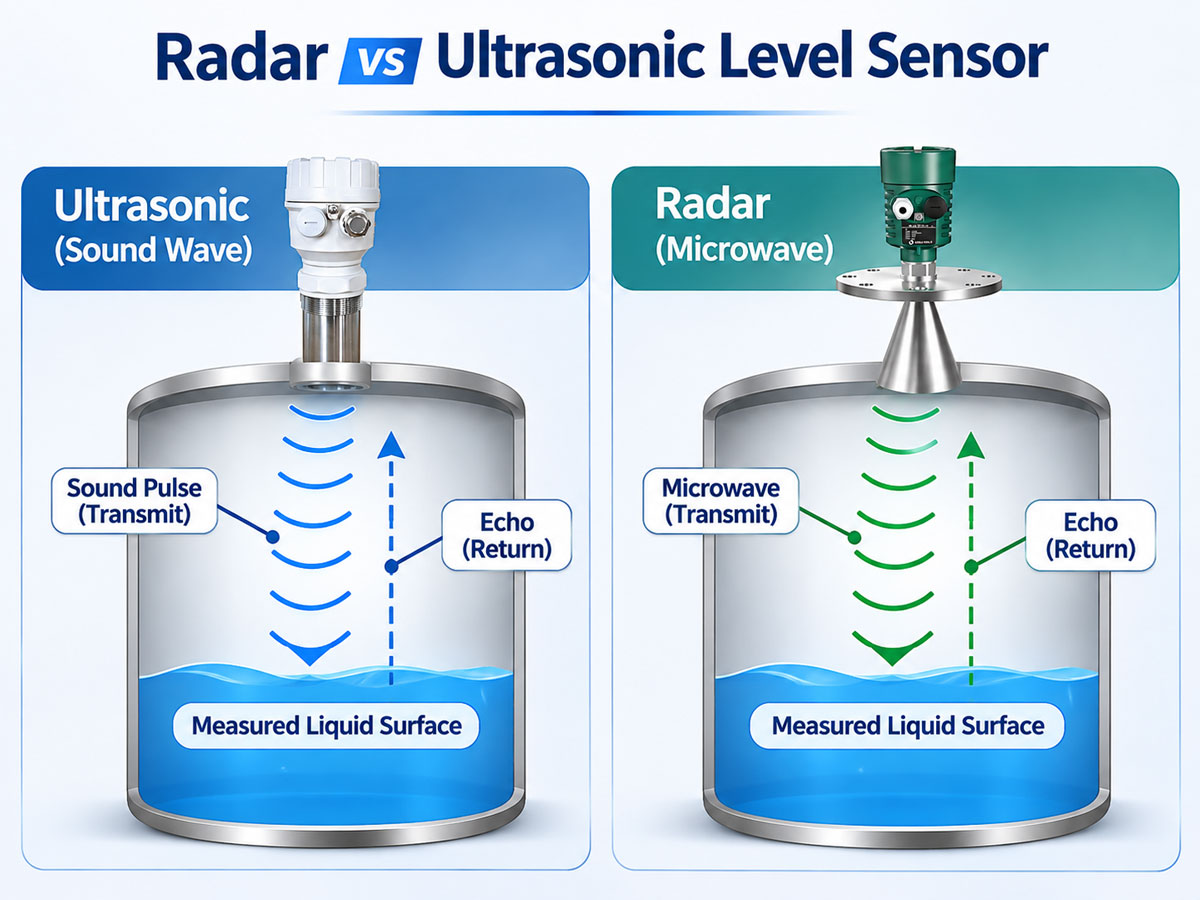
Los sensores de nivel ultrasónicos emplean cristales piezoeléctricos para producir un impulso mecánico lanzado desde la membrana del sensor. Debido al cambio en la densidad del aire y el medio, la onda de sonido puede reflejarse desde la superficie del medio de proceso. La membrana del sensor recibe el pulso reflejado en un tiempo similar a la distancia entre la membrana del sensor y la superficie del medio. Debido a que la distancia de calibración vacía se programa cuando se pone en marcha el sensor, el instrumento puede dar el nivel restando la distancia de la distancia de calibración vacía.
El sensor de nivel ultrasónico luego envía un pulso a la superficie del líquido o sólido para determinar el nivel del tanque. También mide el tiempo de vuelo de la señal que se refleja. Un pulso ultrasónico necesita aire como medio de transmisión. Funciona de acuerdo con la velocidad del sonido en el aire. Por lo tanto, no se puede usar para medir el nivel en el vacío. Si hay gases como nitrógeno (N2), dióxido de carbono (CO2) y metano en el sensor o en la superficie, dará como resultado un sonido de velocidad diferente que provocará grandes errores de medición.
El radar funciona en el mismo principio de vuelo en el tiempo que el nivel ultrasónico. La diferencia entre ellos es que utiliza microondas de alta frecuencia que se producen a partir de una antena. A diferencia de las ondas de sonido que se reflejan de acuerdo con un cambio en la densidad, las microondas funcionaron de acuerdo con un cambio en la constante dieléctrica del medio de proceso. Las microondas no necesitan aire como transmisor, ya que son electromagnéticas. Debido a esto, el transmisor de nivel de radar es, por lo tanto, adecuado para usarse en el vacío o en la presencia de otros gases separados del aire. Se utiliza un instrumento de medición de nivel de radar para enviar microondas a un líquido o sólido y medir el tiempo de vuelo de la señal reflejada para determinar el nivel.
Aplicaciones de transmisor de nivel ultrasónico
Los sensores ultrasónicos del medidor de nivel son aplicables en muchos tipos de aplicaciones, incluyendo cuencas de agua de lluvia, pozos húmedos y productos químicos para aguas residuales. Son flexibles y necesitan poco mantenimiento.
Otros usuarios evitaron los sensores de medición de nivel ultrasónico porque en el pasado proporcionaron mediciones erróneas como resultado de la condensación. Sin embargo, hay sensores ultrasónicos que vienen con autolimpieza automática que elimina los errores de condensación. Funciona monitoreando la membrana de amplitud del sensor. La condensación se detecta amortiguando la amplitud. Luego, la unidad aumenta los cristales de frecuencia piezoeléctrica, lo que da como resultado el efecto de autolimpieza que libera a la membrana del sensor del efecto amortiguador de la condensación. Esta característica, por lo tanto, permite a los usuarios utilizar tecnología ultrasónica sin preocuparse por la condensación.
También se emplea un sensor de nivel en una medición de nivel de canal y vertedero que lo transforma en caudal utilizando la curva QH. Muchos sensores ultrasónicos vienen con una curva QH preprogramada para diferentes canales y vertederos. Otros instrumentos permiten la entrada manual de una mesa utilizada en canales o vertederos no estándar. Esto elimina los costos adicionales asociados con la tecnología de radar.
Los instrumentos de nivel ultrasónico también se utilizan para medir cuencas de agua de lluvia, por lo tanto, para proteger las plantas de aguas residuales de la sobrecarga. Puede hacer esto midiendo todas las variables junto con solo un sensor de nivel en la cuenca conectado a un nivel transmitido conectado a aproximadamente 1,000 pies del sensor.
Los medidores de nivel ultrasónicos son pequeños, por lo tanto, se pueden montar en lugares estrechos como el techo. También puede garantizar una indicación de alta medición en el tubo para protección contra inundaciones incluso si está bajo el agua. Si se usa en interiores con bajas temperaturas, se debe usar con calentadores para evitar la formación de hielo para mediciones confiables.
Se utilizan dos sensores de medición de nivel con uno instalado aguas arriba y aguas abajo para medir la diferencia de nivel al limpiar pantallas de barras mecánicas. Los niveles resultantes serán casi iguales cuando la pantalla esté limpia. Sin embargo, el flujo ascendente aumenta cuando la pantalla de la barra atrapa desechos y sólidos.
The main measurement difference is how each sensor works through the space above the liquid. Ultrasonic sensors use sound, so changes in gas composition or temperature can change sound speed and affect the calculated level. Radar uses microwaves and does not rely on sound speed. This can be an advantage when the gas conditions vary, but it does not remove the need to check the materials exposed to the tank atmosphere.
For acid service, the choice comes down to the actual gas conditions and the chemical compatibility of the selected instrument. Ultrasonic can be considered when the gas path is stable and its exposed materials are suitable. Radar is worth evaluating when changing gas conditions affect sound-based measurement. In either case, confirm the materials and process limits of the exact model before selection.
What Makes an Open Sump Difficult?
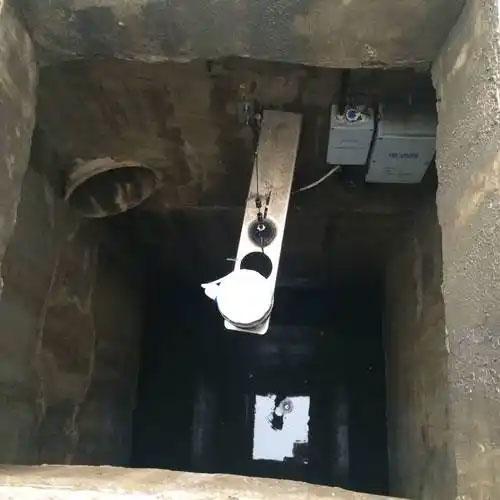
An open sump often presents a geometry and range problem. Measure the distance from the planned sensor face to both the lowest and highest liquid levels. The highest liquid level must remain outside the model’s blind zone, while the lowest level must remain within its measuring range.
The beam also needs a clear path. A ladder, wall, pipe, inlet stream or pump structure inside the beam can create a competing echo. Waves and splashing can make the surface return fluctuate. Compare the installation drawing with the pit layout and avoid mounting directly over an inlet or a structure that can reflect the signal.
If the required output is flow rate from an open channel, level alone is insufficient. The channel geometry or a weir/flume and a configured level-to-flow relationship are also needed.
For a calm, atmospheric water sump, such as a rainwater basin or wet well, the HL ultrasonic range may be a practical option when its measuring range, blanking distance and beam clearance fit. Across a mechanical screen, two ultrasonic sensors can measure the level difference: when the screen is clean, the levels on both sides are similar; when the screen becomes blocked, the upstream level rises. For wet-well service, also check the sensor face for condensation and dirt, which can change the echo over time.
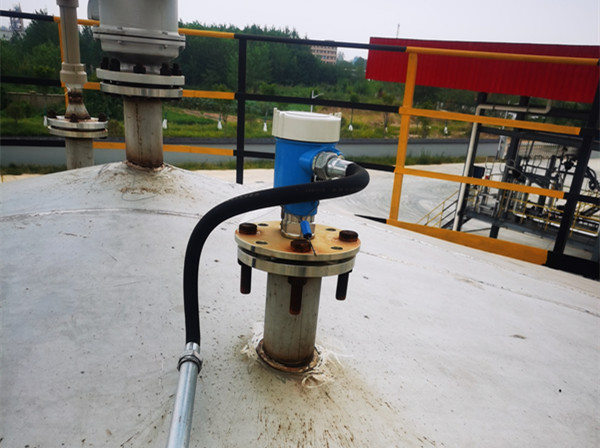
For a vessel with significant vapor or pressure, compare the exact radar model’s process limits and installation requirements instead of assuming that an open structure makes the application simple.
Which Specifications Matter When Choosing Radar or Ultrasonic?
Do not choose a level sensor by comparing maximum range or accuracy figures alone. Check the same operating level range, installation distance and process conditions for both technologies. The table below summarizes the main differences to review before selecting a model.
Selection point
Ultrasonic level sensor
Radar level sensor
Measurement signal
Uses sound pulses and calculates distance from echo travel time.
Uses microwave signals and calculates distance from the returned echo.
Gas above the liquid
Changes in gas temperature or composition can change sound speed and affect the reading.
Measurement does not depend on sound speed in the gas above the liquid.
Foam
Foam can absorb or scatter sound and weaken the echo from the liquid.
The echo may come from the foam surface or the liquid below it; foam can also weaken the signal.
Installation
Check sensor height, blanking distance and clear space along the sound path.
Check antenna position, nozzle, nearby structures and the path of the radar signal.
Process exposure
Check the sensing face, housing, seals and process connection for vapor or splash exposure.
Check the antenna, housing, seals, flange and process connection for vapor or splash exposure.
Model limits
Confirm measuring range, accuracy, temperature and pressure limits for the selected version.
Confirm measuring range, accuracy, temperature and pressure limits for the selected model.
For either technology, check the minimum and maximum liquid levels against the model's stated range and blanking distance. Also review the specified accuracy, process temperature and pressure limits, connection type and exposed materials. Published maximum range is not a guarantee that the sensor will measure reliably in every installation.
The most useful comparison is therefore not one radar model against one ultrasonic model in isolation. It is the performance of each suitable model under the same tank conditions, with the required measuring span and installation geometry clearly defined.
A Real Open-Tank Application
An open tank holding a sodium chloride solution needed level measurement at atmospheric pressure, with a maximum operating temperature of 55 °C. We supplied an ultrasonic level meter sized for a measuring range of up to 4 m to a system-integration customer.
The choice leaned toward ultrasonic for three reasons. The tank was open and atmospheric, the liquid surface provided a clear reflection for the ultrasonic pulse, and the 4 m measuring span fitted the HL 0–4 m version. Its 0.20 m blanking distance left most of the required range usable, while the 55 °C operating temperature was within the meter’s stated operating range.
What Information Should You Send for Model Selection?
Tell us about your tank or pit, and we will recommend a model. A short description is enough to get started. The more detail you include, the faster we can respond.
The following information is most useful:
What you are measuring, and the minimum and maximum levels.
Whether the tank is open or pressurized, and its operating temperature.
For foam: the foam condition, and whether you need the liquid surface or the top of the foam.
For an acid: the acid name, concentration, and normal and cleaning temperatures.
Any drawing or photo of the tank, including pipes, ladders or other obstructions.
Not sure about some of these details? Send what you have. Our engineers can ask follow-up questions to fill in the gaps.
Contact our engineers with these details, and we will reply within 24 hours with a recommended model code and quotation.
FAQ
Is radar always better than ultrasonic for foam?
No. Foam can weaken ultrasonic signals and radar signals. Lower-frequency radar is generally more suitable for thick, dense foam than high-frequency radar, but the result still depends on foam properties and the required measuring surface. Confirm the exact application before selecting a model.
Can an ultrasonic level meter measure through acid vapor?
Do not assume that it can. Vapor composition and changing conditions in the sound path can affect an ultrasonic echo, while acid vapor may also expose the sensor face and nearby materials. Review the actual vapor conditions and material compatibility against the selected model’s limits.
Does the sodium chloride tank application prove acid compatibility?
No. The supplied application involved sodium chloride solution under its recorded conditions. It does not establish compatibility with another chemical, concentration or temperature.
Can a level meter measure open-channel flow?
A level meter measures liquid height. To calculate flow, the installation also needs known channel geometry or a weir/flume and the corresponding level-to-flow relationship.
Is radar or ultrasonic better for wastewater treatment?
The choice depends on where the meter is installed. For a clean, calm wet well or rainwater basin, an ultrasonic meter is often the cost-effective choice when its range and blanking distance fit. For a foaming sludge digester or a tank with changing gas conditions, compare a radar model against the actual process conditions.