
Free Flow Rate Calculator
CFM to SCFM Converter
Convert actual cubic feet per minute (CFM) to standard cubic feet per minute (SCFM), or convert SCFM back to CFM using pressure and temperature conditions.
Convert actual cubic feet per minute (CFM) to standard cubic feet per minute (SCFM), or convert SCFM back to CFM using pressure and temperature conditions.
Enter the actual operating conditions and select the standard reference conditions.
Note: PSIG is converted to PSIA by adding 14.7 psi, assuming sea-level atmospheric pressure. The calculator uses absolute pressure and absolute temperature in the gas-law conversion. Results are for reference; confirm the applicable standard conditions for your industry and instrument specification.
CFM means cubic feet per minute. It describes a gas volume flow rate at the actual pressure and temperature where the flow is measured. SCFM means standard cubic feet per minute. It expresses gas flow as an equivalent volume at a stated set of standard reference conditions.
Because gas volume changes with pressure and temperature, the same amount of gas can have different CFM and SCFM values. A flow rate stated only as CFM may therefore be incomplete unless the operating pressure and temperature are also known.
For an ideal-gas conversion, use absolute pressure and absolute temperature:
SCFM = CFM × (Pactual / Pstandard) × (Tstandard / Tactual)
Pressure values in the equation must be absolute pressure. Temperature values must be on an absolute scale, such as Rankine (°R). For gauge pressure in PSIG, add local atmospheric pressure to obtain PSIA. This calculator uses 14.7 psi as the atmospheric-pressure assumption.
The reference conditions used for SCFM can differ between standards, industries, and equipment specifications. This calculator provides selectable presets as shown below, plus a custom option. Always check the reference conditions stated on the flow meter datasheet, project specification, or applicable standard before comparing values.
| Preset | Reference Pressure | Reference Temperature |
|---|---|---|
| ASME (calculator preset) | 14.7 PSIA | 68°F |
| ISO / Metric (calculator preset) | 14.5 PSIA | 32°F |
| CAGI (calculator preset) | 14.5 PSIA | 68°F |
| Custom | User-defined | User-defined |
These are the preset values configured in this calculator, not a statement that every organization or application uses the same reference conditions.
When specifying a gas flow meter, state whether the required flow rate is actual or standardized. Also provide gas composition, operating pressure, operating temperature, flow range, and the reference conditions for any standard-volume output. These details help ensure that the instrument is sized and configured correctly.
Different meter technologies serve different gas applications. Thermal mass flow meters measure gas mass flow and are commonly used where direct mass-flow measurement is required. Vortex and turbine meters may suit particular gas services when their operating conditions, gas properties, and installation requirements are appropriate. Confirm the meter's specified output basis and calibration conditions with the manufacturer.
No. The relationship depends on actual pressure and temperature compared with the selected standard conditions. The SCFM value can be higher or lower than the actual CFM value.
The gas-law relationship uses absolute pressure. PSIG is gauge pressure measured relative to local atmospheric pressure, so it must be converted to absolute pressure before calculation.
The displayed conversion uses an ideal-gas relationship. For many practical conversions, the gas identity does not appear explicitly in this simplified equation, but real-gas effects and application-specific requirements may matter. For critical measurements, confirm the method with an engineering standard or instrument supplier.
Select the reference pressure and temperature required by your project, customer, industry standard, or flow meter specification. If none of the listed presets applies, choose Custom and enter the required values.
Related Product
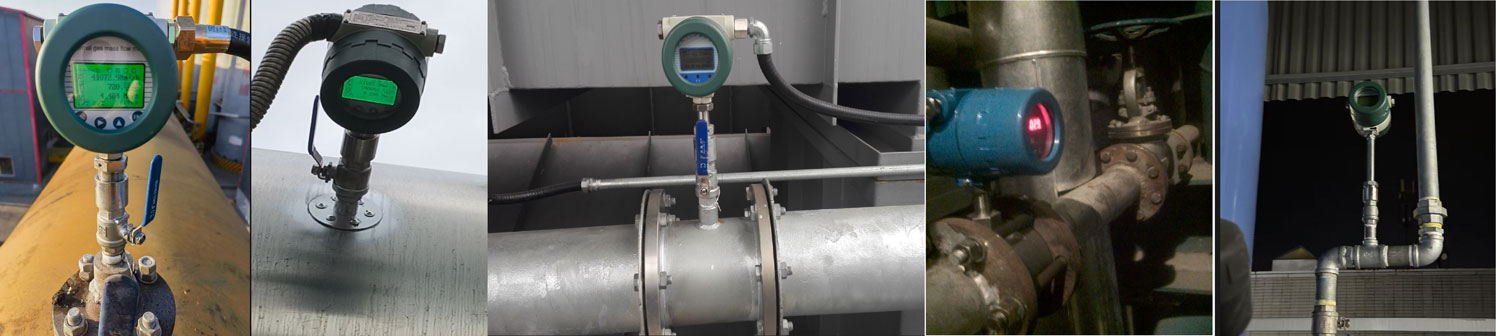
Direct gas mass & standard volumetric flow measurement for air, N₂, CO₂, biogas, LPG, CNG & natural gas — no temperature or pressure compensation needed.
View Products →